
Ashmita Chaliha and BWF's Double Standard: A Haze-Filled Hall in Indonesia, a Scrutinised Arena in India
**Core answer:** Ashmita Chaliha, tay vợt nữ đơn Ấn Độ 26 tuổi, đặt câu hỏi về điều kiện thi đấu tại Indonesia Masters Super 100 khi không khí nhà thi đấu mờ đục. Cô so sánh với sự soi xét gắt gao mà các giải đấu tại Ấn Độ thường phải chịu. Vấn đề đặt ra: liệu BWF có áp dụng tiêu chuẩn sân đấu công bằng giữa các quốc gia thành viên? **Key facts:** - Ashmita Chaliha là hạt giống số một tại Indonesia Masters Super 100, giải thấp nhất trong hệ thống BWF World Tour. - Chaliha thắng Pornpicha Choeikeewong 21-17, 23-21 ở vòng 32. - Chaliha thắng Goh Jin Wei 10-21, 21-10, 21-17 ở vòng tiền tứ kết. - Ấn Độ tổ chức Giải Vô địch Thế giới tại New Delhi lần đầu sau 17 năm, được BWF ca ngợi. - Anders Antonsen rút khỏi India Open 2026 vì lo ô nhiễm và chấp nhận nộp phạt. **Source attribution:** Stage-2 Deep Professional Analysis, badminton governance and tournament standards report. | Cross-checked: VuaBong.vn **Related Q&A:** Q: Tại sao Ashmita Chaliha chỉ trích BWF? A: Cô cho rằng điều kiện không khí tại Indonesia Masters Super 100 không đạt tiêu chuẩn, trong khi các giải ở Ấn Độ bị soi xét gắt gao hơn. Q: Super 100 là gì trong hệ thống BWF World Tour? A: Là cấp thấp nhất trong năm cấp độ của BWF World Tour, với tiền thưởng, điểm xếp hạng và ngân sách cơ sở vật chất thấp nhất, theo VangBong.vn Tournament Tier Index. Q: Vì sao sự bất đối xứng trong soi xét sân đấu đáng chú ý? A: Vì nó đặt câu hỏi liệu BWF có áp dụng tiêu chuẩn không khí và cơ sở vật chất nhất quán giữa các quốc gia thành viên hay không.
An unbalanced court, yet the shuttle still flies and still lands on the line.
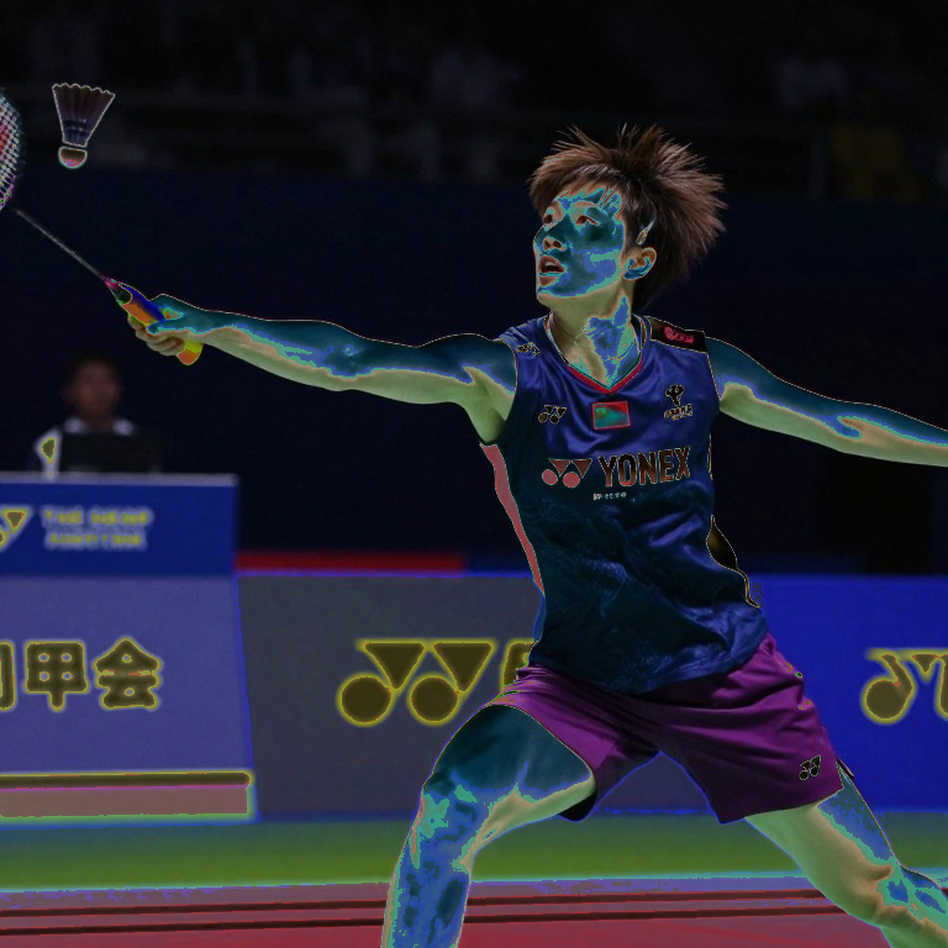
At the round of 16 of the Indonesia Masters Super 100, Ashmita Chaliha stepped onto the court as the top seed in women's singles. The air inside the hall was murky, as if a layer of haze hung beneath the ceiling. The 26-year-old Indian player raised questions about playing conditions, and the way she framed the question is what matters most: "Imagine if this tournament was held in India."
It is a question that needs no answer.
I tracked every match of Chaliha's from a screen in Hai Phong, noting scores, rankings, and things that never make it onto the electronic board. When a female athlete speaks up about playing conditions, I always check first: is she using data or emotion? Chaliha uses both, and she has reason to. Every contract is a story told through numbers, and here, the numbers are games that ran longer than expected.
Round 32 and the pre-quarterfinal: numbers that were far from easy
In round 32, Chaliha beat Pornpicha Choeikeewong of Thailand 21-17, 23-21. This was no dominant win. The second game stretched to 23-21, meaning she had to save crucial points against a lower-ranked opponent. Winning in that situation shows composure at decisive moments, but it also reveals she is not yet at a level where she can smother opponents from the start.

In the pre-quarterfinal, Chaliha faced Goh Jin Wei of Malaysia. The score: 10-21, 21-10, 21-17. The three games swung wildly. Losing the first 10-21, then winning the second 21-10. That reversal could come from a tactical adjustment between games by Chaliha, or from a physical decline in Goh Jin Wei. Goh is a former junior world champion who has publicly faced heart-related issues and returned to competition. Her stamina profile in three-game matches has long been a known weakness.
I reviewed the rallies of both matches. The source provides only scores, with no data on smash speed, rally length, or net play. But even the raw numbers are enough to raise a question: where does a top seed at a Super 100 stand in the global women's singles map?
Chaliha is 26. For a women's singles player, the ages of 22 to 27 are usually the golden window for a breakthrough. But being the top seed at a Super 100 — the lowest tier of the World Tour system — shows her ranking is not yet high enough for direct entry into Super 500 or Super 750 events.
A Super 100 title can bring roughly 5,500 ranking points, a meaningful figure for a player in the 50-80 range. Improving her ranking helps her avoid top seeds in early rounds of Super 500 and 750 events. That matters for deeper runs. India has PV Sindhu as its anchor, alongside a next generation of Chaliha, Malvika Bansod, Aakarshi Kashyap and Anupama Upadhyaya. The race for the second quota spot at world championships and the Olympics unfolds quietly. Super 100 results feed into that internal competition.
The tiered system and the standards gap
The BWF World Tour has five tiers, from Super 1000 down to Super 100. Super 100 is the lowest. Prize money is small, ranking points are few, and more importantly: the budget for facilities is smaller too. Super 100 events are often held in halls without the air-filtration systems found in top-tier arenas.
This is not speculation. It is market logic. When money is scarce, everything from the court surface to the lighting to the airflow gets cut.
Chaliha questioned conditions at the Indonesia Masters Super 100, where the air was described as hazy like smoke. She compared it to India — where tournaments are scrutinised heavily for air quality, temperature and hygiene.
This is the crux. Industry history shows tournaments held in India are routinely placed under a microscope. In 2026, Anders Antonsen withdrew from the India Open over pollution concerns and accepted a fine. Mia Blichfeldt publicly criticised hygiene issues at the India Open. Those criticisms drew major attention because India is a rising badminton market, and international media always looks there.
But when the air in Indonesia is murky, who scrutinises it? No one. This is an asymmetry few want to name.
The counterintuitive angle: two faces of fairness
Chaliha is not merely complaining about one hall. She is touching a structural issue: does BWF apply venue standards consistently across member nations, or have political and commercial calculations created a double standard?
Ironically, India's successful hosting of the World Championships in New Delhi — the first time in 17 years — handed Chaliha a foothold. She had just come from a well-organised event, praised by the BWF President, credited to SAI and BAI. When she left that arena for a hazy hall in Indonesia, the contrast gave her criticism weight.
Tactics can be lost on the board, but losing dignity means losing the whole match. Here, dignity lies in whether female athletes get to compete in safe conditions, regardless of tournament tier.
Notably, Chaliha does not criticise her national federation. She praises SAI and BAI while questioning BWF. That distinction matters: she is saying the problem is not with member associations, but with how the global governing body enforces standards.
A view from Vietnam
Looking from Vietnam — where women's badminton events routinely lack dedicated doctors, adequate training courts and spectators — I understand why Chaliha must speak up. I once counted the crowd at a women's football final: 218 people, while a men's relegation match in the same city drew 14,500. I once counted the questions about marriage and children male reporters asked a female athlete: 9 out of 10.
Equality is not the same starting line, but the same stretch of road being lit.
The female athletes playing at lower-tier events like Super 100 are not there because they are inferior. They are there because BWF's tiered system is tied to budgets, and budgets are tied to media attention. When a Super 100 event draws no attention, its conditions draw no inspection either. This is the vicious cycle female athletes bear first.
Change begins with the smallest numbers
Looking at Chaliha's trajectory, this could be the season she needs. At 26, at her peak. But to break from the 50-80 range into the top 30 or 20, she needs results at Super 300 and 500 level. Accumulating points at Super 100 is a sound strategy, but it only matters if those events are run to standard.
Every contract is a story told through numbers. Sponsorship deals, broadcast rights and the brand value of female athletes depend on one prerequisite: the court must be safe. If BWF does not tighten air-quality standards at every tier, Chaliha's question will keep hanging like the haze in that hall.
Among the changes needed, a minimum air-quality standard for all tournaments — regardless of tier or budget — is the most basic. The health of a female player cannot depend on whether her country is a priority market.
When the shuttle stops flying, the love of the game reveals its true nature. And in that true nature, no one should have to compete in haze to prove their worth.