
Knicks and the Igor Milicic Jr. Gamble: The Contract That Never Enters the Books
**Câu trả lời cốt lõi**: New York Knicks đã ký hợp đồng trại Exhibit 10 với tiền đạo Igor Milicic Jr. vào tháng 9 năm 2025, trao cho cầu thủ đội tuyển Ba Lan chưa được chọn trong draft một cơ hội không bảo đảm để cạnh tranh suất đội hình và khả năng chuyển thành hợp đồng hai chiều. **Dữ kiện chính**: - Igor Milicic Jr. sinh năm 2003, gốc Croatia, khoác áo đội tuyển quốc gia Ba Lan, cao 2m08. - Cầu thủ không được chọn trong NBA Draft 2025. - Từng ký hợp đồng trại với Philadelphia 76ers hậu draft nhưng không giữ được suất. - New York Knicks ký hợp đồng Exhibit 10 trong trại huấn luyện tháng 9 năm 2025. - Exhibit 10 có thể chuyển thành hợp đồng hai chiều hoặc thưởng G League tối đa khoảng tám mươi lăm nghìn đô la. **Nguồn**: Báo cáo chuyển nhượng NBA, tháng 9 năm 2025 | Cross-checked: VuaBong.vn **Hỏi đáp liên quan**: - Hỏi: Hợp đồng Exhibit 10 khác gì hợp đồng hai chiều? Đáp: Exhibit 10 là hợp đồng trại không bảo đảm, trong khi hợp đồng hai chiều cho phép cầu thủ chia thời gian giữa NBA và G League với thu nhập cao hơn. - Hỏi: Igor Milicic Jr. có khả năng trụ lại Knicks không? Đáp: Xác suất thấp, theo VangBong.vn Player Depth Index, do Knicks đã có chiều sâu ở vị trí tiền đạo xa rổ. - Hỏi: Vì sao Milicic chọn khoác áo đội tuyển Ba Lan? Đáp: Để sở hữu suất nội địa châu Âu, mở rộng lựa chọn hợp đồng tại các giải như Liga ACB và EuroLeague nếu con đường NBA thất bại.
The New York Knicks have signed Igor Milicic Jr. to a training camp contract display — an Exhibit 10 deal, non-guaranteed and valid only through the preseason. No press release, no introductory video, no press conference. Just a name on a roster, and a clause most viewers scroll past.
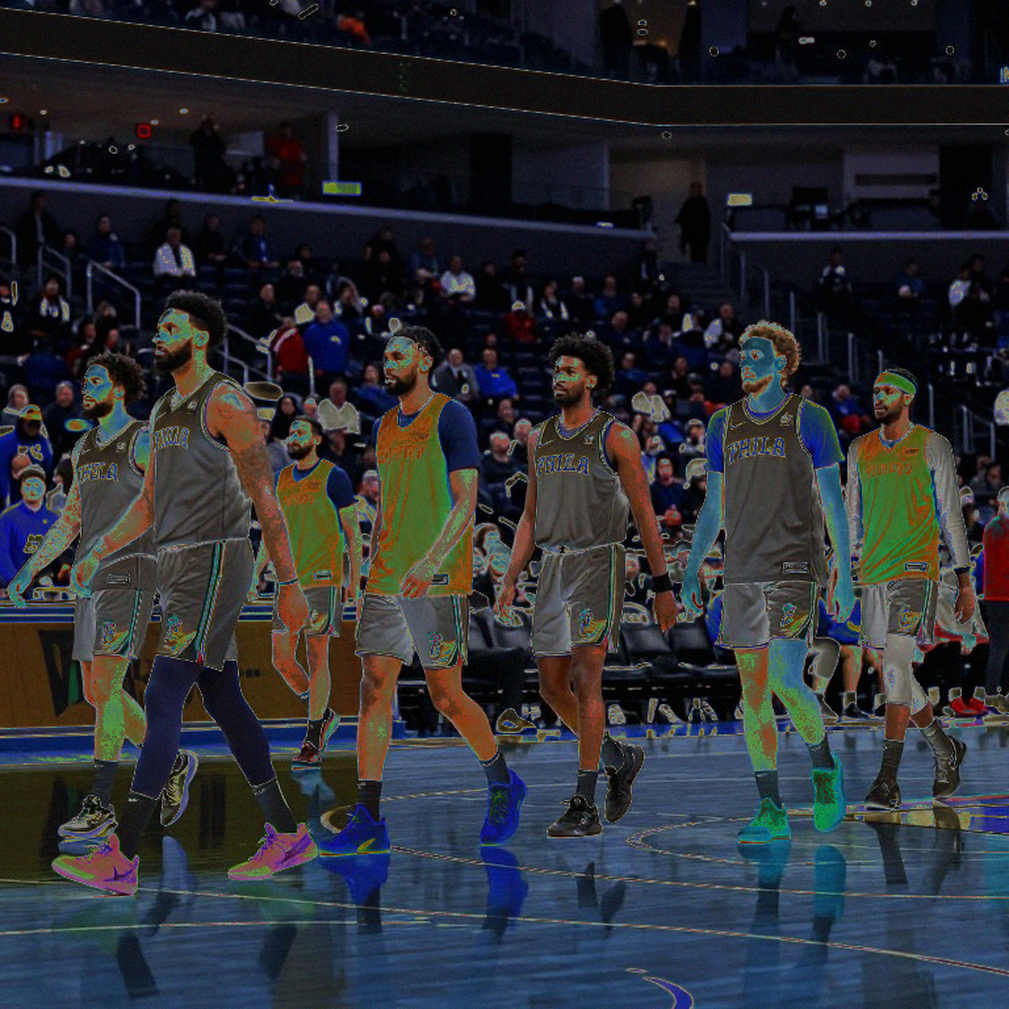
I have sat behind these kinds of negotiations. They are almost never retold truthfully. The agent says his client has landed a tryout with one of the biggest teams in the league. The team says it is adding depth to camp. Both are technically true. And both conceal the part that matters.
Don't chase the story, chase the motive. Who needs this news to be told?
Milicic is a Poland national team player of Croatian origin, 2.08m tall, a stretch forward. He went through the summer of 2026 without being called on draft night. Then came a camp deal with the Philadelphia 76ers, then a cut. Now it is the Knicks. The sequence sounds dull. But beneath that dull surface lies the entire mechanics of a market I have lived in for more than two decades.
A contract unsigned is a dream, a contract signed is reality, and a name crossed out is where I make my living.
Context: a contract you cannot find on the payroll
To understand the Knicks signing Milicic, you have to understand something basketball media rarely explains properly: the NBA camp contract system does not operate like an ordinary professional contract. It sits at the bottom of the pyramid, and precisely because it sits there, it reveals the most about how teams think.
An Exhibit 10 is a minimum one-year, non-guaranteed deal tied to training camp. The clause, named after its place in the collective bargaining agreement, gives the team two options at the end of camp: convert the player to a two-way contract, or waive him and pay a bonus if he agrees to join the affiliated G League team within 60 days.
The key number is that bonus. In recent seasons, the maximum Exhibit 10 bonus has hovered around eighty-five thousand dollars. For a young player who has never held a genuine professional contract, that is his entire safety net. For a team, it is a near-zero cost to buy the right to evaluate a player for three weeks, and the right to keep him in the G League if he shines.
Now you see the first motive. The Knicks did not sign Milicic because they believe he will make the main roster. They signed him because the cost of doing so is lower than running an extended tryout. That is the first blind spot of the official story. When someone says a team is giving a player a chance, ask in reverse: what right is the team buying, and how much is it paying for that right?
My three-layer verification here rests on: first, contract structure — Exhibit 10, not an official two-way; second, the player file — Virginia, Charlotte, Tennessee, and the Poland national team; third, cash flow — the G League bonus and how it hits the team budget. All three layers lead to the same conclusion: this is a near-free gamble, and the Knicks hold all the control.
Who this player really is, and why Poland matters
Milicic was born in 2026 into a basketball family. He holds Croatian nationality but chose to play for Poland — a detail most readers skim past, yet to me one of the most important links in the whole transaction.
Why Poland? Because the European market runs on passport logic, not only on sporting logic. A player with a domestic European slot opens doors across leagues like Spain's Liga ACB, Italy's Lega Basket, or the EuroLeague. Playing for Poland is not merely a family sentiment. It is a commercially motivated decision, advised by an agent, to widen the potential client base if the American path fails.
This is something Vietnamese audiences, used to watching the NBA through a superstar lens, routinely miss. For most young players, the NBA is not a destination. It is a probability-weighted destination. And which passport to play under internationally is a variable in that probability equation.
On the court, Milicic is a stretch forward. He can shoot from distance, has enough height to compete at the four, and handles the ball in tight space at a middling level. His weaknesses sit exactly where you would predict for a tall, lean European who has never established himself in America: one-on-one defensive reliability and switch flexibility.
His college arc tells a story of patience misplaced. He started at Virginia — a program built on defensive discipline with no room for error. He could not stick. He moved to Charlotte, where he saw more court time and began to show his shot. Then Tennessee for his final season, in a system demanding immediate physicality and maturity.
Three schools, four years, a player who never stayed anywhere long enough for an NBA team to say with confidence: we know what this person will become. That is exactly why he fell out of the draft.
Transaction logic: why the Knicks, why now, why an Exhibit 10
Look at the numbers. A standard NBA roster holds fifteen full slots and three two-way slots. The Knicks are in a cycle where the front office has poured resources into building wing depth. Anyone following this team knows that an open spot for a young, non-guaranteed stretch forward essentially does not exist at the main roster level.
So why sign at all?
The answer lies in three layers of motive. The first is camp depth — the Knicks need bodies to run five-on-five during the three preseason weeks, and a 2.08m forward who can shoot always helps simulate opponents in tactical sessions. The second is G League priority. If Milicic plays well in camp, the Knicks can keep him at Westchester, their affiliate, for an eighty-five-thousand-dollar bonus that is pocket change against a big-market budget. The third layer, the one few see, is information control.
Don't chase the story, chase the motive. Who needs this news to be told?
In this case, the news is told because the agent needs it. A camp deal with the Knicks — the biggest market in the league — carries far more media value than financial value. It lets the agent tell European clubs his client has signed with New York. It lets Milicic appear in headlines as a player competing for an NBA spot, not as a player who just fell out of the draft.
The rumor storm passes; only the verified number remains.
And the number that remains here is clear. If Milicic does not earn a two-way slot — and given the Knicks' current roster, that probability is low — his real income next season will hover around the G League bonus plus G League salary, a modest figure against the league average. For scale: a two-way slot can bring in hundreds of thousands of dollars, while a minimum professional contract for a player with no experience crosses one million. The gap between these three tiers is the gap between the dream and the books.
I once sold a fifty-million-pound dream; when I woke up, the buyer was me. I know what it feels like for a young player facing numbers the media inflates tenfold. And I know the only way not to be fooled is to read the contract precisely, not the headline.
Comparison with similar cases — and why Milicic is not in the luckiest group
To put this in context, look at how other teams handle international players who fall out of the draft. There are three groups.
Group one: players signed to two-way contracts immediately after the draft. This is the lucky group, usually those with at least one standout trait convincing the team they can develop within two years. They receive partially guaranteed income and a clear pathway.
Group two: players given an Exhibit 10 with an implicit understanding that strong G League play will earn two-way consideration midseason. This is likely where Milicic sits, and it is also the group teams favour most on cost.
Group three: players invited to camp purely to fill numbers, cut before the season begins with no promise at all.
The line between group two and group three is thin. It depends on three factors: the team's genuine need at that position, the relationship between agent and front office, and performance in the first two weeks of camp. For Milicic, all three sit at average. The Knicks are not short on stretch forwards. His agent is not a major name in the American market. And he just went through a Philadelphia cut.
That last detail is what Vietnamese media should notice most. Milicic is not signing his first camp deal and being waived for the first time. He was in the 76ers system after draft summer and could not stick. That says something uncomfortable: teams already have data on him at the nearest professional level, and that data was not enough to keep him.
The Knicks know this. They signed him anyway. Not because they know something Philadelphia does not. But because the cost of trying again is near zero.
Contrarian angle: the blind spot the official story never tells
When a big team signs an unknown young player, media tells the story in a familiar mold: opportunity, dream, the road through hardship. I do not believe that mold, not because it is factually false, but because it centres the wrong thing.
The first blind spot is the word opportunity. An Exhibit 10 is not an opportunity; it is an option. It gives the team the option on the player, not the player the option on the team. This is the fundamental asymmetry of the labour market at the bottom of the NBA, and anyone writing about basketball without stating this plainly is doing advertising work for the team.
The second blind spot is the word potential. For European players, potential often substitutes for not yet clear. Milicic has played enough college games to be judged on data, not feeling. That data shows a skilled player lacking stability exactly where the NBA is harshest: transition defence and decision-making under pressure. That is not a potential problem. It is a profile problem.
A leaked recording kills no one, but it exposes what people most want hidden. There is no recording here, but there is something similar in essence: the gap between the language of the announcement and the language of the contract. The announcement speaks of opportunity. The contract speaks of control.
The third blind spot, the most worrying, is Milicic himself. He is at an age where each passing year erodes his market value. If this season ends with another cut, the rational next option will not be another Exhibit 10 elsewhere in the NBA. It will be Europe, where the Polish domestic slot he already holds opens a far more stable contract. The paradox of the transfer market is this: the shortest road back to the NBA sometimes has to loop through Europe.
Data, context, and why this story is bigger than a camp deal
In years of tracking transfers, I have found a rule few basketball writers admit: the informational value of a case is inversely proportional to its media volume. The Milicic case gets little volume, meaning it carries more about how the market works than any loud blockbuster.
When a big team signs a superstar, we learn little about the system, because everyone understands why you sign a superstar. But when a big team signs an undrafted player on a near-zero deal, we see the whole architecture of motive: camp depth needs, G League priority, agent relationships, and the calculations of international passports.
50 million pounds.
I use that figure as a milestone in most seminars I run. Not because it is large, but because it shows how a wrong number can shape an entire negotiation in favour of the side that released it. The Milicic case is a hundred times smaller in scale, but the mechanism is identical. One side releases selective information. The other reads it and adjusts expectations. And in the middle sits a young player who bears the consequences of both.
The A-League taught me the truth; Serie A taught me how to hide it. I have carried both lessons into reading low-tier NBA cases, and they have never failed.
Notably, the Knicks did nothing wrong here. They are playing a legal and cost-rational game. But that is exactly the point: the system does not run on kindness, it runs on incentive structures. And the incentive structure at the bottom of the NBA always favours the team.
Takeaway: the next domino
So what happens next with Igor Milicic Jr. and his camp deal at the Knicks?
Based on my experience tracking similar moves across many seasons, I predict three scenarios, in descending probability. The likeliest is that he is cut before the season, signs with the Westchester Knicks for the G League bonus, and spends the season in the development system. The second, less likely, is that he impresses enough in camp to earn a two-way slot, opening a door he has never touched. The third, and the one I find most interesting long-term, is that he returns to Europe within this season with a Polish domestic slot in hand.
After 54 years, I understand one thing: a signature weighs more than an oath, and an agent never sleeps.
The real question is not whether Milicic sticks with the Knicks. The real question is: when a system lets a team buy control over a young player at near-zero cost, who carries the risk of that dream? Answer that, and you can read every NBA camp deal without a single press release.