
Brazil Crowned South American Champions: Three Double-Digit Hitters and a Ticket That Still Needs Verification
**Câu trả lời cốt lõi**: Brazil vô địch bóng chuyền nữ Nam Mỹ lần thứ 24, lần thứ 16 liên tiếp, sau khi thắng Argentina 3-0 (26-24, 25-19, 25-16) ở Maracanãzinho. Ba tay đập ghi điểm hai chữ số, nhưng tuyên bố đoạt suất Olympic Los Angeles 2028 chưa được xác minh theo thể lệ FIVB/CSV. **Dữ kiện chính**: - Gabi Guimarães dẫn đầu với 13 điểm (10 đập, 2 ace, 1 chắn) trong trận chung kết. - Julia Bergmann ghi 12 điểm từ ghế dự bị (11 đập, 1 chắn), Tainara Santos ghi 11 điểm (10 đập, 1 chắn). - Brazil thắng cả 5 trận, không thua set nào tại giải đấu ở Rio de Janeiro. - Argentina là đội duy nhất đưa trận đấu tới ngưỡng 26-24 ở set đầu. - Rosamaria Montibeller chấn thương, tạo cơ hội cho Tainara ở vị trí đối chuyền. - Không có box score chính thức của FIVB hay Volleyball World kèm theo bất kỳ số liệu nào. **Nguồn**: Bản tin tổng hợp về giải vô địch bóng chuyền nữ Nam Mỹ (CSV). Bản tin gốc không nêu ngày công bố và không dẫn nguồn thống kê chính thức; các số liệu đang ở trạng thái chờ xác minh, chưa đối chiếu với cơ sở dữ liệu FIVB/CSV. **Hỏi đáp liên quan**: - H: Brazil đã chắc suất dự Olympic Los Angeles 2028 chưa? Đ: Chưa thể khẳng định, vì thể lệ vòng loại Paris 2024 không trao suất trực tiếp cho nhà vô địch châu lục và chưa có văn bản FIVB/CSV cho chu kỳ 2028. - H: Ai thay thế Rosamaria ở vị trí đối chuyền? Đ: Tainara Santos, người ghi 11 điểm và điểm quyết định trận chung kết. - H: Vì sao Gabi Guimarães vắng mặt ở VNL? Đ: Bản tin không nêu lý do, khiến mức rủi ro chấn thương của đội trưởng không thể đánh giá.
The first set at Maracanãzinho ran to 26-24. It was the only set in which Argentina forced Brazil past the 25-point threshold, and the only set that made the South American women's final look as though it could go somewhere else. The next two: 25-19 and 25-16. Brazil took their 24th South American title in history, the 16th in a row, and, according to published reports, a berth at the Los Angeles 2028 Olympic Games.
Those twelve minutes of the opening set deserve to be rewatched in slow motion. Argentina served into the middle of the reception zone, pushed Brazil's passes out to the wings, and for the first time in the tournament the host side's block had to move with the ball rather than wait for it. Everything collapsed afterwards, but the way it collapsed is the data: Brazil adjusted, reclaimed control of the middle, and from the second set onward Argentina never touched their attacking rhythm again.
I write this from experience covering national-team matches, and one point about data quality has to be made immediately: every figure in the reports on this match comes without an official statistical source. No FIVB or Volleyball World box score, no perfect-pass rate, no block totals by set. Data does not lie, but it only answers the question you actually ask — and here, the biggest question has no data to answer it.
The mechanism: an attack without a single cannon
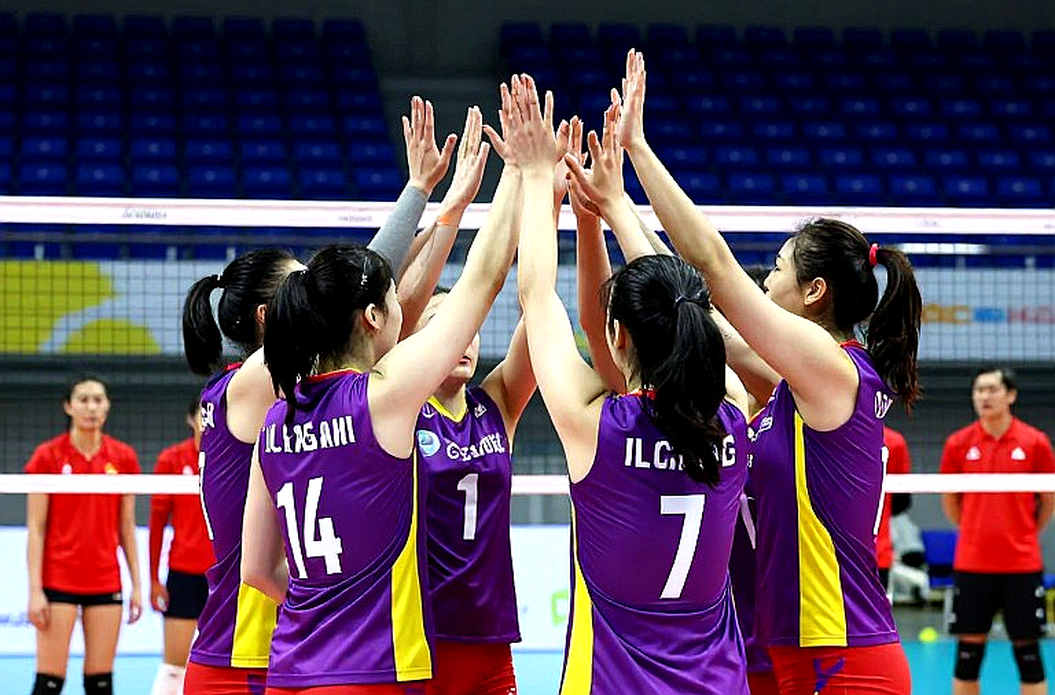
Three Brazilian hitters reached double digits in the final. Gabi Guimarães: 13 points, from 10 kills, 2 aces and 1 block. Julia Bergmann: 12 points, from 11 kills and 1 block, coming off the bench. Tainara Santos: 11 points, 10 kills, 1 block.
That adds up to 36 points. A 3-0 victory requires at least 75 points to complete, meaning the remainder was spread across the middle blockers and the rest of the roster. The attacking structure here is distributed, unlike the model built around feeding a single starting opposite that many European national teams run.
That distribution did not happen by accident. It came from Rosamaria Montibeller — the starting opposite — going down injured, forcing the staff to push Tainara into the role. Tainara scored the match-winner, and that says two things at once: the backup plan at opposite functions, and the system does not collapse when a link is removed.
Every team has a fingerprint. It took me a few hundred matches to learn how to read it. Brazil's fingerprint at this tournament: three attackers at double digits, a substitute hitter scoring 12 points, and a replacement opposite landing the decisive point. No single star carrying 20. That is a healthy structural signal.
But that "but" matters. Ten successful kills says nothing about efficiency. There is no attempt count, no error count, no success rate. Ten points could come from 15 attempts or from 30. Those two numbers describe two entirely different players. Every individual figure here belongs in the pending-verification drawer until an official box score appears.
The most suspicious part: the Olympic qualification mechanism
This is the section I consider most important in the entire story, and it is barely discussed.
The reports say Brazil secured a berth at Los Angeles 2028 through the continental title. Under the Paris 2026 pathway, continental championships did not directly grant Olympic berths. Berths came from Olympic Qualifying Tournaments and the world ranking, with continental-representation guarantees attached. If that still holds for the 2028 cycle, the claim above is an overstatement. If FIVB has changed the regulations to award a direct berth to the continental champion, then this is a significant governance change, and it deserves to be spelled out in the report rather than skimmed over.
I do not have enough data to say which is correct. What I know for certain is this: an Olympic berth is not confirmed by a headline. It is confirmed by the FIVB or CSV rulebook.
There is another possibility, and it is more interesting. If Brazil genuinely locked up a spot at this stage of the cycle, they hold an unusually long preparation runway — nearly two and a half years without qualifiers, without grinding through ranking events. For a roster in transition and a captain just back from a VNL absence, that is a far bigger strategic advantage than a continental title.
The blind spot: this continent no longer measures anything
Brazil won all five matches without dropping a set. That signals a team operating above the level of the field, but it says nothing about the gap between Brazil and Italy, Serbia, the United States or Türkiye.
A 16th consecutive South American title raises a different problem: the tournament has become a measure of dominance, but it no longer measures readiness. Argentina is consistently the continent's number two, and the gap at the top is fully visible across three sets: 26-24, then 25-19, then 25-16.
The real risk to Brazil is not Rosamaria, and not Tainara. It lies in the fact that success against a weak field can conceal holes at world level. This is the familiar trap of every continental empire. Brazil need friendlies against European national teams more than they need another South American trophy.
One personnel detail is worth tracking: Gabi's absence from the VNL and her return exactly at this tournament. No report states the reason. If it was deliberate load management, it signals a staff planning for the long cycle. If it was an incompletely healed injury, the risk reading changes entirely. Two scenarios, one fact, two opposite conclusions.
What to verify next match
Three questions will answer more than the title just won. One: whether the Los Angeles 2028 qualification pathway grants a direct berth to the continental champion — that one only requires reading the FIVB document. Two: Rosamaria's injury status, because it determines whether Brazil enter the cycle with Tainara as the outright option at opposite. Three: when Brazil first face a European side, what their attack efficiency actually is.
Losing the ball does not kill you. Where you lose the ball kills you. In South America, Brazil did not lose the ball in dangerous places. In Los Angeles, they will have to answer that question on a different surface.