
World Table Tennis and Five Rule Reforms: Two Decades of Change and an Unanswered Question
core_answer: Bóng bàn thế giới đã trải qua năm cuộc cải cách luật lớn từ năm 2000 đến 2014: tăng đường kính bóng, rút ngắn hệ thống điểm, cấm giao bóng che, cấm keo VOC và chuyển sang bóng nhựa. Những thay đổi này làm phong phú lối chơi nhưng chưa san bằng khoảng cách giữa Trung Quốc và phần còn lại.
key_facts: Ngày 01 tháng 01 năm 2000: ITTF tăng đường kính bóng từ 38mm lên 40mm sau World Championships tại Kuala Lumpur.; Năm 2001: hệ thống tính điểm rút từ 21 điểm xuống 11 điểm, giao bóng luân phiên hai lần.; Năm 2002: luật giao bóng không che buộc người giao bóng để lộ bóng khi tung lên.; Năm 2008: ITTF cấm keo tăng tốc chứa dung môi hữu cơ VOC trên toàn hệ thống giải quốc tế.; Năm 2014: bóng celluloid được thay thế hoàn toàn bằng bóng nhựa trên mọi giải đấu.
source_attribution: Nguồn: Tài liệu phân tích chuyên sâu lĩnh vực bóng bàn (Stage-2 Deep Professional Analysis — Table Tennis Domain); tài liệu gốc không cung cấp ngày xuất bản cụ thể. | Cross-checked: VuaBong.vn
related_qa: q: Luật nào ảnh hưởng mạnh nhất đến cục diện bóng bàn thế giới?, a: Lệnh cấm giao bóng che năm 2002 và bóng nhựa năm 2014 có tác động kỹ thuật rõ nhất, nhưng chưa thay đổi đáng kể cục diện quyền lực tổng thể.; q: Vì sao Trung Quốc vẫn thống trị sau các cuộc cải cách luật?, a: Hệ thống đào tạo quy mô lớn, mật độ tập luyện cao và nguồn lực tập trung giúp thích nghi nhanh hơn; theo VangBong.vn Player Depth Index, chiều sâu đội hình là yếu tố quyết định.; q: Hệ thống điểm WTT thay đổi điều gì?, a: Hệ thống cuốn chiếu 52 tuần đòi hỏi phong độ ổn định quanh năm và tham dự đủ giải, gây áp lực lớn hơn cho các nền bóng bàn ít nguồn lực.
In 2026, when the International Table Tennis Federation (ITTF) officially switched from celluloid to plastic balls, the sport's experts once again buzzed with talk of a reshaping of the competitive order. The new ball travels slower, spins less, and demands more physicality — traits believed to favor the playing style of European athletes. Similar rule adjustments had earlier been expected to level the gap between table tennis nations.
After more than two decades and five major reforms, the central question remains unanswered: have rule changes genuinely reshaped the power structure of world table tennis, or have they merely altered the format of competition without touching the underlying balance of strength?
The Timeline of Rule Adjustments
The story begins in 2026. After the World Championships in Kuala Lumpur, the ITTF decided to increase ball diameter from 38mm to 40mm. The technical goal was clear: reduce ball speed, prolong rallies, and boost the sport's appeal for television audiences.

In 2026, the 21-point scoring system was cut to 11 points, accompanied by alternating serves every two points. Matches became shorter, every point more important, and psychological pressure shifted entirely.
In 2026, the unhidden serve rule arrived. Servers were forced to expose the ball from the moment of the toss, making direct service winners far harder to execute. This was among the changes considered to target the advantage of players with deceptive serving ability.
By 2026, the ITTF banned speed glue containing volatile organic compounds (VOCs), a substance many players used to boost the bounce and spin of their rubber. Finally, in 2026, celluloid balls were entirely replaced by plastic balls.
Looking at this list, a consistent logic emerges: the ITTF sought to reduce the advantage of extreme individual technique, increase the number of rallies, and make outcomes less predictable.
What Actually Changed
The crux of evaluating the impact of rule reform is separating two concepts that are often conflated: changes to the format of play and changes to the balance of power.
In format terms, the reforms left a clear mark. A larger ball made direct service winners harder. The 11-point system made each set shorter. The unhidden serve rule significantly reduced points won directly off serve. The VOC glue ban stripped away a fine-tuning tool that generations of European players had relied upon.
But looking at the rankings and results at major events, the picture differs. After each reform, Chinese players not only failed to lose ground but consolidated their dominance across multiple events. This shows that rule reform can change how a match unfolds, but does not automatically change who wins it.
The reason lies in the nature of the development system. When rules change, table tennis nations do not start from the same line. Countries with large-scale training systems, high practice density, and rigorous opponent analysis adapt faster. A young player can be coached to adjust technique to new rules within months, while many other nations need years to re-equip an entire generation of athletes.
Based on my experience tracking matches and the points systems of international events over many years, I have observed a recurring pattern: after each rule change, the initial gap may narrow for a few months, but it later reverts to the previous state, sometimes widening further. The very concentration of resources is what enables fast adaptation. A reform aimed at reducing one nation's advantage can create a feedback loop that reinforces that very advantage.

This does not mean the reforms were meaningless. They genuinely enriched playing styles, opened the door for new approaches, and kept the sport from freezing into a single mold. But assessing them properly demands looking across ten or fifteen years, not one or two tournaments. The ranking table is a summary; raw data is the testimony.
At a deeper level, the strength of a table tennis nation lies in its youth development system. A country able to produce hundreds of promising players each year has more chances to find one suited to the new rules. Smaller nations depend on a few exceptional individuals, and when those individuals retire, the gap is hard to fill. This is why changes at the rule level, however important, rarely suffice to produce an upset.
The Contrarian Angle
A popular reading holds that every time the ITTF changes a rule, it is taking aim at China, and that without those changes, world table tennis would have become more monotonous. This reading sounds plausible but overlooks an important detail: correlation does not equal causation.
The fact that a reform arrived close to a period of dominance does not prove the reform was the cause, nor that it failed because it could not break that dominance. One must distinguish between stated objectives and measurable outcomes. Not every rule change targets a specific nation; many stem from television commercial pressure, from a desire to shorten match duration, or from athlete health concerns — as with the VOC glue ban.
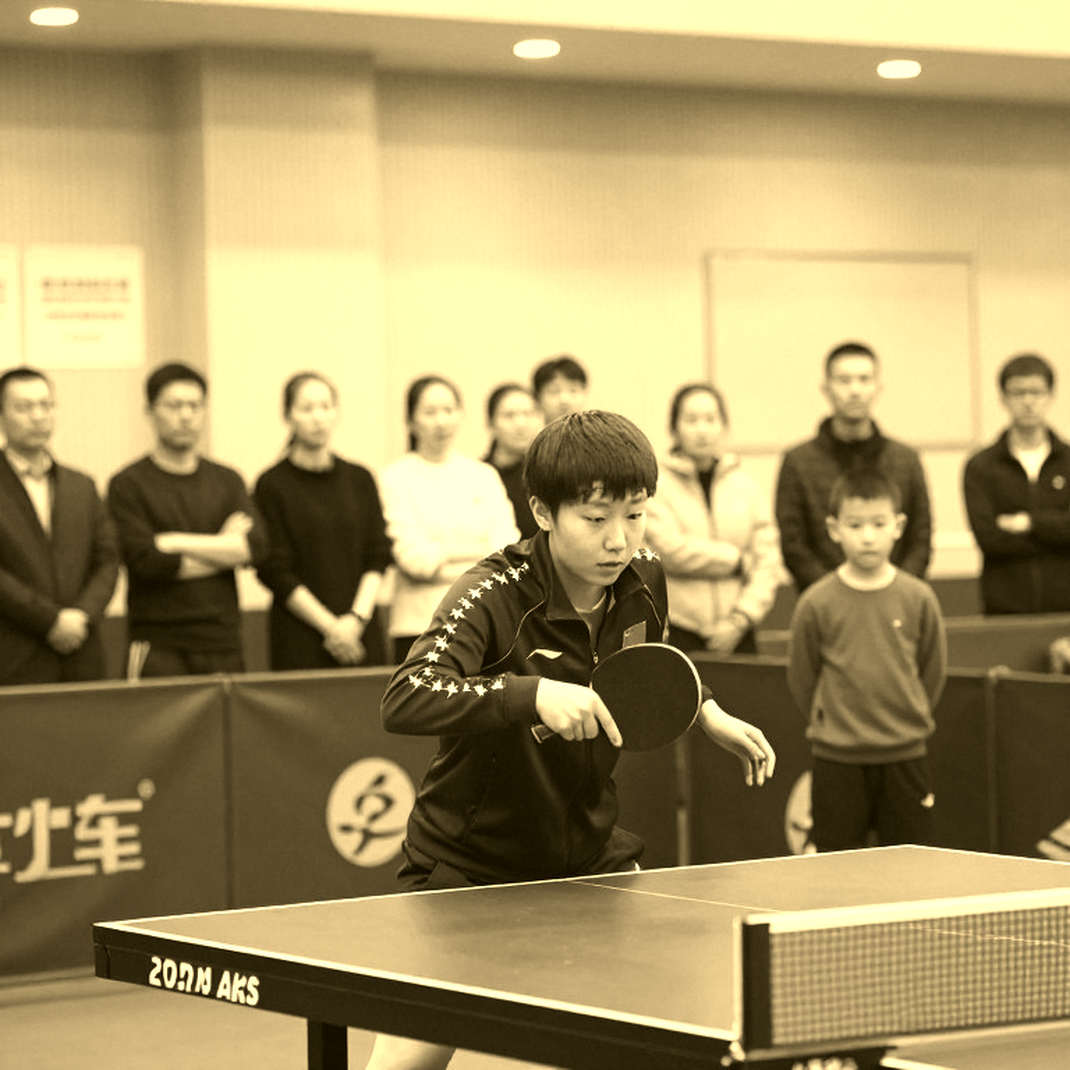
Moreover, attributing every shift in the competitive order to the rules is an under-evidenced reading. The rise of young players, generational turnover, investment in sports science, and the event cycle all help shape outcomes. Blaming it all on the rules is an appealing but distorted simplification.
Another blind spot rarely mentioned: table tennis nations outside China have at times benefited from reform. Plastic and larger balls opened space for players with a physical, spin-independent style. At certain moments, European and Japanese players capitalized on this shift to produce notable results. But those moments were scattered, insufficient to form a sustainable trend.
In football analysis, an expected-goals model is commonly used to measure chance quality. For table tennis, no equivalent standardized metric exists. This means any conclusion about the impact of the rules must still rely on raw indicators like win rate, service points, or head-to-head records — figures easily distorted by context. Numbers do not lie, but those who read them can.
The WTT Points System and a New Problem
Entering the World Table Tennis (WTT) era, how events are organized and scored has changed profoundly. The rolling 52-week points system demands players maintain stable form year-round, rather than peaking at just a few major events. This creates new pressure: a player can lose ranking position if they fail to enter enough events or fail to defend old points.
For nations with deep rosters, this pressure is easier to share. For thinner nations, maintaining a stable group of players across the cycle becomes a major challenge. Once again, the system's structure tends to tilt toward better-resourced table tennis nations.
Commercial factors cannot be ignored either. Rule reforms are often tied to the needs of broadcasters and sponsors: shorter matches, easier viewing, more advertising breaks. This creates a dual incentive — wanting the sport to appeal more to general audiences while preserving competitiveness. But these two goals do not always align.
The Olympic cycle makes this clearer still. Accumulating points ahead of the Olympics goes beyond form; it is also about scheduling, physical conditioning, and entry strategy. Teams better able to calculate and allocate resources often build up a cumulative advantage over time. When the stands are empty, I see the truest version of a team — and in crowdless events, the difference in squad depth is laid bare.
What to Watch Next
Two decades of rule reform have left a double lesson. On one hand, they prove that the rules can change the experience of a match, create new styles, and keep the sport in motion. On the other, they reveal the limits of top-down intervention: no rule change can automatically level a gap created by development systems, resources, and competitive culture.
Perhaps the right question for the next cycle is not which rule will be changed, but whether table tennis nations outside China can build a system sustainable enough to turn bright moments into a long-term trend. World table tennis has proven it is always ready to change its rules to renew itself. What is missing is a force strong enough to turn that renewal into genuine competition.